A Month-by-Month Breakdown for Connecticut Homeowners
Your Bill Throughout the Year
Spring & Summer (Mar–Sep)
Your panels overproduce, banking credits for winter. Peak months can generate 50-60% more than winter.
Fall & Winter (Oct–Feb)
Production drops but your banked credits cover the difference. This is completely normal and designed for.
These figures are illustrative examples only and do not represent a guarantee of performance. Actual production and savings vary based on system design, roof orientation, shading, equipment, weather, and usage patterns.
You’ve done the research. You’ve sat through the sales pitch. Maybe you’ve even signed the paperwork. But there’s one question that keeps nagging at you—the question most solar companies either skip over or answer with vague promises:
“What actually happens to my electric bill after the panels go up?”
It’s a fair question. And honestly? Most homeowners don’t get a straight answer until they’re already 6 months into their solar journey, staring at a confusing bill wondering if they made the right choice.
This article is different. We’re going to walk through exactly what happens—month by month—so you know what to expect before you sign anything. No surprises. No confusion. Just the facts.
First, Let’s Talk About How Connecticut’s Solar Billing Actually Works
Connecticut uses a program called the Residential Renewable Energy Solutions (RRES) program. If you’ve heard the term “net metering,” this is Connecticut’s updated version of that—and in some ways, it’s actually better than the old system.
Here’s the simple version of how it works:
- Your solar panels generate electricity during the day
- Your home uses what it needs in real-time
- Any excess electricity flows to the grid and earns you credits at the full retail rate
- At night or on cloudy days, you pull electricity from the grid
- Your bill is the difference between what you put in and what you took out
The key thing to understand: Credits roll over indefinitely. Unlike the old system where you’d lose unused credits each March, now your credits stay in your account forever (or until you cash them out when you move).
Think of it like rollover minutes on an old cell phone plan—if you don’t use them this month, they’re still there next month
The Reality: Your Panels Won’t Produce the Same Amount Every Month
This is where most solar presentations gloss over the details. They show you an annual production number and an annual savings number, but they don’t show you what happens month by month.
Here’s the truth: Connecticut gets about 4 peak sun hours per day on average—but that average hides a big swing between seasons:
- Summer months (May–August): 5+ peak sun hours per day
- Winter months (November–February): Under 3 peak sun hours per day
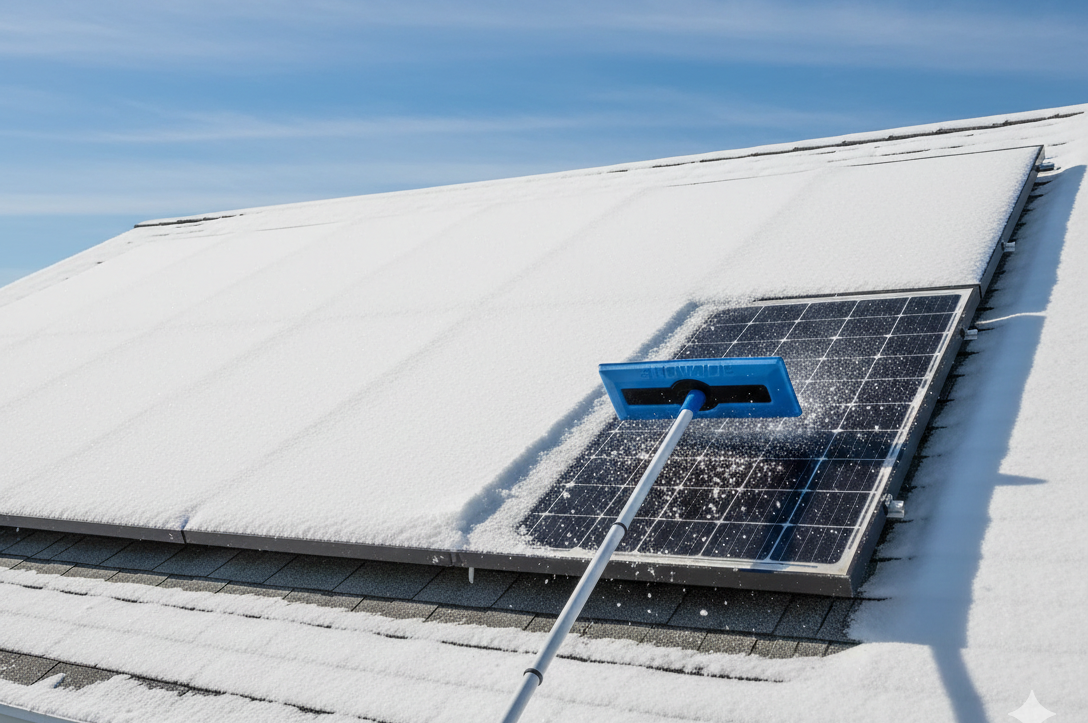
This means your system will produce roughly 50-60% more electricity in summer than in winter. Add shorter days, lower sun angles, and occasional snow coverage, and winter production can drop even further.
But here’s the thing: this is completely normal and accounted for in your system design. A properly sized system overproduces in spring, summer, and fall so you bank credits to carry you through winter.
A Typical Year: What Your Bill Looks Like Month by Month
Let’s look at a real example. This is based on a typical 8 kW system installed on a Bristol-area home with average electricity usage of about 700 kWh per month.
Note: Your actual numbers will vary based on your system size, home orientation, shading, and energy usage patterns. This is meant to show you the pattern, not predict your exact bills.
IMPORTANT: These figures are illustrative examples only and do not represent a guarantee of performance. Actual production and savings vary significantly based on system design, roof orientation, shading, equipment, weather conditions, and individual household usage patterns. Consult your specific proposal for projected savings.
Month | Solar Production | Home Usage | Net to Grid | Credit Change | What’s Happening |
January | 480 kWh | 750 kWh | -270 kWh | -$27 | Using credits |
February | 520 kWh | 700 kWh | -180 kWh | -$18 | Using credits |
March | 680 kWh | 650 kWh | +30 kWh | +$3 | Breaking even |
April | 820 kWh | 600 kWh | +220 kWh | +$22 | Building credits |
May | 920 kWh | 580 kWh | +340 kWh | +$34 | Building credits |
June | 980 kWh | 700 kWh | +280 kWh | +$28 | Peak production |
July | 960 kWh | 850 kWh | +110 kWh | +$11 | High AC usage |
August | 900 kWh | 820 kWh | +80 kWh | +$8 | High AC usage |
September | 780 kWh | 650 kWh | +130 kWh | +$13 | Building credits |
October | 600 kWh | 620 kWh | -20 kWh | -$2 | Breaking even |
November | 450 kWh | 680 kWh | -230 kWh | -$23 | Using credits |
December | 410 kWh | 720 kWh | -310 kWh | -$31 | Using credits |
What this table shows: You’re building up credits during the high-production months (March through September) and spending them down during the low-production months (October through February). By the end of the year, it balances out.
What Your Utility Bill Actually Looks Like Now
Here’s where it gets a little confusing—because you’ll still get a bill from your utility company. It just looks different.
Before Solar: The Old Bill
Your old bill had two main parts:
- Supply charges (the electricity itself) – roughly 60% of your bill
- Delivery charges (getting it to your home) – roughly 40% of your bill
If you used 700 kWh at $0.30/kWh, you’d pay around $210/month.
After Solar: The New Bill
With solar, your utility bill shows:
- Your grid consumption (what you pulled from the utility)
- Your net credits (what you sent to the grid)
- Your accumulated credit balance (your “bank”)
- A small “Solar Energy Adjustment” fee ($0.005/kWh of total production)
In many months—especially spring and summer—your bill will show a negative balance. That’s money in your account that rolls forward to cover future months.
The Real Numbers: Before vs. After
And remember—this is year one. Your utility rates will likely go up 3-5% per year. Your solar payment stays the same. The gap widens every year.
This comparison is for illustrative purposes only. The figures shown ($66/month solar payment, $210/month utility bill) are examples based on typical scenarios and do not represent a specific financing offer or guarantee of savings. Actual monthly payments depend on system size, financing terms, and individual qualification. Actual savings depend on your specific system design, roof characteristics, and energy usage patterns. *Remaining utility fees include minimum customer charges and grid connection fees.
Common Questions We Hear
“Will I ever have a $0 electric bill?”
Probably not exactly $0. There are small fixed fees (customer charges, grid connection fees) that you’ll pay regardless of usage—usually $10-20/month. But your usage charges can absolutely be $0 or negative.
“What happens to my credits if I move?”
You can cash out any accumulated credits when you close your account. The utility will pay you for any remaining balance. For leased or financed systems, the transfer to the new homeowner is typically straightforward.
“What if I use more electricity than my system produces?”
You’ll pay the difference at the standard utility rate. This might happen if you add an electric vehicle, install a hot tub, or convert to heat pumps. A good installer will ask about your future plans and size your system accordingly.
“Why is my winter bill higher than summer?”
Lower solar production + potentially higher heating-related electricity use = drawing from your credit bank. This is normal. The credits you built up in summer are designed to cover winter. Trust the annual math, not the monthly fluctuations.
The Bottom Line
Understanding your post-solar electric bill comes down to three things:
- Think annually, not monthly. Your system is designed to balance over 12 months, not each individual month.
- Credits roll over. Bank them in summer, spend them in winter. It all evens out.
- Compare total costs. Your old utility bill vs. your new utility bill + solar payment = your real savings.
The real question isn’t “will my electric bill be $0?” It’s “will my total energy cost be lower than it was before?”
For most Connecticut homeowners, the answer is yes—from month one.
Want to see what your specific numbers would look like?
We’re a Bristol-based, family-owned company—when you call us, you’re calling Connecticut, not a national call center. We’ll walk through your actual utility bills and show you exactly what to expect, month by month. No pressure, no surprises.
"They went above and beyond!" — Donald V.
Disclosure
This article is for educational purposes only and does not constitute a guarantee of savings or system performance. All examples, figures, and comparisons shown are illustrative and based on typical scenarios—your actual results will vary based on your home’s specific characteristics, energy usage, system design, financing terms, and other factors. Financial benefits vary by household.
SAVKAT Inc. participates in Connecticut’s Residential Renewable Energy Solutions (RRES) program administered by Eversource and United Illuminating. Program terms, tariff rates, and incentives are subject to change. For the most current program information, visit the Connecticut PURA website or consult with a SAVKAT representative.
Before making any financial decisions regarding solar installation, you should review a customized proposal based on your specific home and energy needs, including all applicable disclosures required under Connecticut law.